Digital Development: Demystifying DDP
Let’s talk about Digital Development Processing (DDP), a clever technique invented by Kunihiko Okano. Unlike traditional film, digital images boast a perfectly linear response curve. What does that even mean? Essentially, if an object’s brightness doubles (say, comparing the faint outer arms of a galaxy to its blazing core), the corresponding pixel intensity in your raw frame doubles too! The upshot? Bright areas can easily get blown out, losing all those beautiful details, while the darker regions can remain stubbornly black, hiding valuable data.
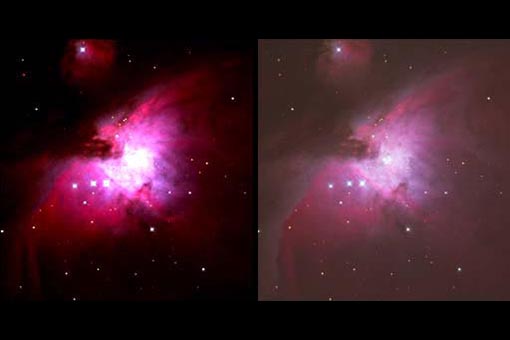
Traditional film photography doesn’t suffer from this quite as much. The film itself has a natural “shoulder” to its response curve, compressing the brightest highlights and preserving detail. DDP’s whole purpose is to give digital images that pleasing, film-like dynamic range. That’s why it’s aptly named “Digital Development” – it’s like developing your digital negative! Several software packages offer this functionality, notably Iris by Christian Buil.