Dithering, Shift & Add, Drizzle: What's the Difference?
Dithering: The Secret Weapon for Cleaner Astrophotos
For a long time, I’ve been on a quest to effectively reduce thermal noise in my astrophotography images. While using dark frames and stacking many subs certainly helps, it often wasn’t quite enough for my taste. With autoguiding, I noticed a particular issue: for a series of images of the same duration, taken under identical conditions (temperature, humidity, etc.), the thermal noise pattern tends to be constant. This means it overlays all the frames in the series with the exact same pixel-by-pixel arrangement (assuming your autoguiding is near-perfect). The result? When you subtract your darks, certain areas of the final image end up less detailed, still marred by these persistent ‘cold’ (or hot, depending on your sensor!) pixels. But the solution, as it turns out, is remarkably simple! If you shift your telescope’s position by about twenty pixels between exposures, your final result will be significantly better!
This technique is what English speakers call dithering, sometimes also referred to as ‘Shift and Add’ or even ‘Drizzle’ (a term Meade notably uses in their Autostar software). The magic happens because by combining slightly shifted images – where the noise pattern is never in the exact same spot relative to your target across the series – you drastically reduce the noise present in your final stacked image. The mathematical averaging performed during stacking becomes much more effective because the noise isn’t locked into the same pixel locations relative to your astronomical object. Software like DeepSkyStacker is perfectly capable of stacking these shifted images, even with shifts of twenty pixels or more. And for the capture side, autoguiding software like Guidemaster can automatically perform this ‘dithering’ for you between exposures.
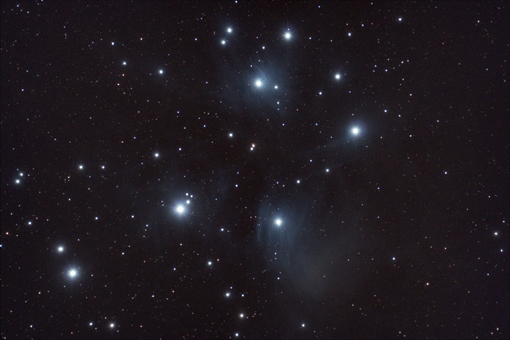
Here’s an image processed the traditional way:
And here’s an image captured under the same conditions as the first, but with a 20-pixel dither applied between each frame in the series. Notice how the noise is significantly reduced, allowing you to pull out so much more detail and information from the final image:
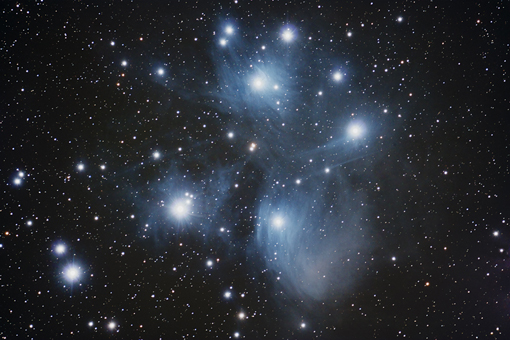
These fantastic comparison images were captured by frasax from the Cloudynights forum. I haven’t had the chance to test this technique myself yet, but it’s definitely on my to-do list!
UPDATE 15/02/2011: I’ve been using this method for a while now with MaxiMDL software, which handles dithering between multiple exposures perfectly.