Parallel Guiding: A Good Idea... Or Is It?
The Guiding Saga: Why I Ditched Parallel Guiding
Autoguiding… man, that’s a whole journey! I want to share my experience and explain why, today, I no longer parallel guide! For a long time, I used a short focal length parallel guiding setup. After experimenting with countless autoguiding solutions (OAGs, long focal length parallel scopes, various sensitivity guide cameras…), I thought I’d finally found the sweet spot for my setup: a 50mm diameter, 250mm focal length guide scope (like a straight-through finder) paired with my trusty SX LodeStar.
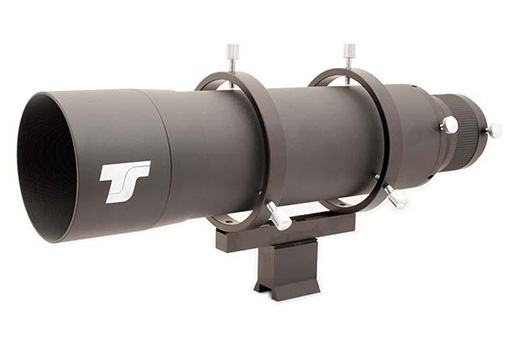
Contrary to popular belief among many astrophotographers, guiding with a very short focal length actually offers several advantages:
- Minimizes “chasing” atmospheric turbulence.
- Adds minimal weight to the mount (just 650g in my case).
- Makes finding a suitable guide star in the field incredibly easy.
With this guiding solution, my guiding logs looked almost perfectly flat, and my 10-minute subs captured at 572mm focal length (FLT100 TEC with 0.8x reducer) showed absolutely no tracking issues.
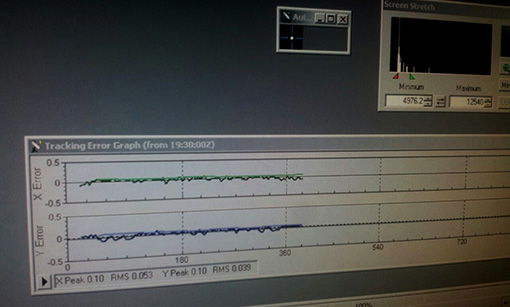
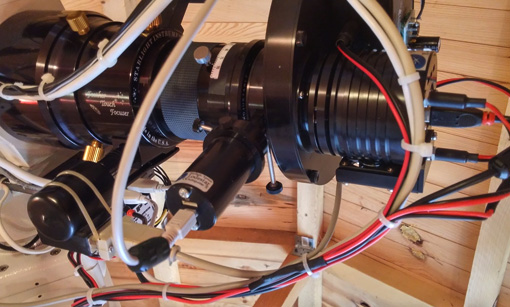
However, when pushing for longer exposures (I’m currently aiming for 20-minute individual subs in SHO), mechanical and thermal flexure really start to rear their ugly heads! The autoguiding logs still looked perfect (and the guiding was perfect), but the actual raw frames were catastrophic! For these longer durations, only an Off-Axis Guider (OAG) truly holds its own… So, I dug out my trusty Starlight Xpress OAG and re-mounted it onto my filter wheel…
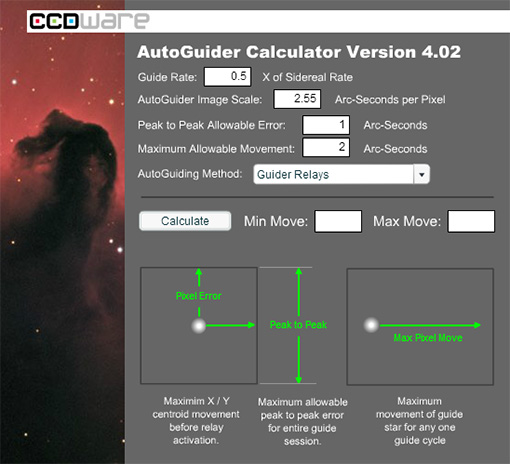
MaximDL is set to take a position measurement every 3 seconds. Aggressiveness in EQMod is set to its default of 0.9, and to 8 in MaximDL. Min and Max moves were carefully calculated using CCDWare’s Autoguider Calculator.
Now, guiding is absolutely rock-solid, no matter how long the exposure!