• Tests and Misc
PHD2 Guiding - Smart Autoguiding for Astrophotography
PHDGuiding: My Go-To Autoguiding Software
In my book, PHDGuiding is hands-down one of the best autoguiding software packages out there. It’s free, super easy to use, and supports a massive array of cameras and mounts. I’ve been using it for months now, and I couldn’t be happier with it. 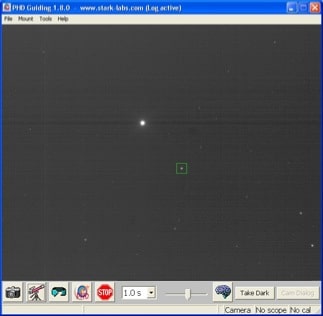
So, what makes PHDGuiding so special? Here are some of its key features (pulled directly from their official site, originally in English):
- Windows and OS X (Universal).
- Simple, lightweight interface, designed with ease-of-use in mind.
- Arbitrary camera orientation, pixel size, telescope focal length, etc., are all automatically measured during the calibration process.
- Guides via ASCOM PulseGuide commands for precise, lag-free control over a wide range of mounts (Windows).
- Guides through ShoeString Astronomy’s ST4-type GPUSB (Windows and OS X) and GPINT (Windows) adapters for precise, lag-free control over a wide range of mounts.
- Guides via Pierro Astro’s USB adapter for precise control over a wide range of mounts.
- Guides through the integrated ST4 port on some cameras.
- On-the-fly stacking of short exposures to increase total exposure time for unmodified cameras.
- Guiding in RA and Dec.
- Manual and automatic unidirectional Dec guiding modes.
- Automatic resizing and stretching of guide images for better display.
- Noise reduction with or without dark frames.
- Real-time performance graphing.
- Freeware.
And for all you gearheads, here’s a list of the cameras PHDGuiding officially supports:
- Atik 16 series (Windows)
- Meade DSI series: I-III, color and Pro (Windows and OS X)
- SAC4-2 (Windows)
- Orion StarShoot DSCI (Windows)
- Orion Guider (Windows)
- Opticstar PL-130
- SBIG USB (Windows and OS X, but check the Help for more info)
- Fishcamp Starfish (Windows and OS X)
- CCD-Labs Q-Guider (Windows)
- MagZero MZ-5 (Windows)
- The Imaging Source Cameras (Windows and OS X)
- Webcams (short and long exposures - parallel, serial, or LXUSB port, Windows)