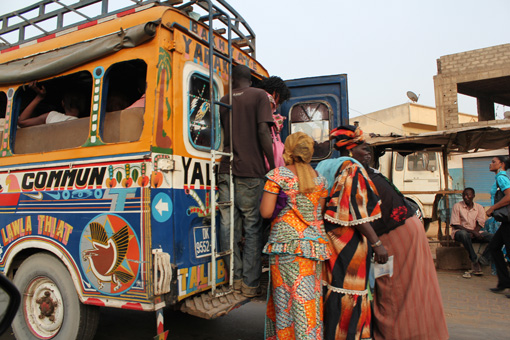
St. Louis, Senegal: My Starry Quest!
My Stellar Adventure in Senegal: Astronomy, Culture, and New Friends!
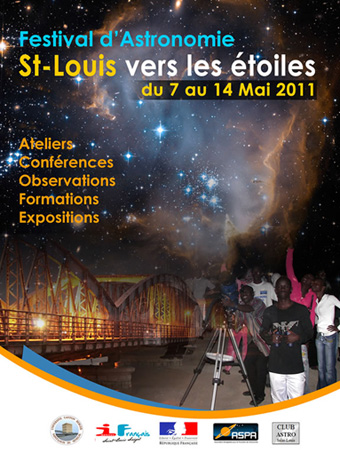
I’ve just returned from an incredible ten-day astrophotography journey in Senegal! It all kicked off with an email from Mr. Maram Kaïre, president of ASPA (Association Sénégalaise pour la Promotion de l’Astronomie). He invited me to spend a few days in Dakar and Saint Louis for their “Saint Louis vers les étoiles” astronomy festival. This year’s theme was astrophotography, and well, they needed an “astrophotographer”! The French Embassy in Dakar generously covered my flight tickets, while Gaston Berger University in Saint Louis, the French Institute of Saint Louis, and ASPA took care of my stay there. Within just a few days, everything was settled, and I was packing my bags!
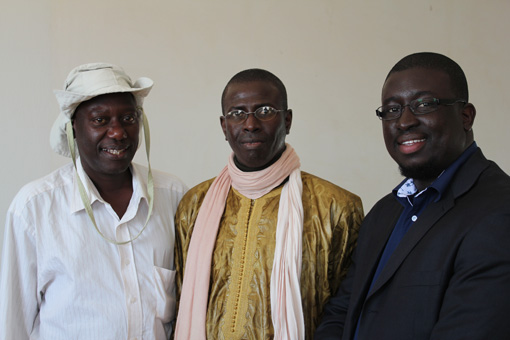
This trip was an amazing opportunity to forge new friendships. I especially want to thank Mr. Maram Kaïre, president of ASPA; Mr. Baïdy Demba Diop, an ASPA instructor; and Mr. Dah Dieng, the event organizer, for their incredible hospitality, kindness, and open-mindedness. You truly don’t meet people like them very often in life!
Here’s a recap of this extraordinary experience:
Thursday, May 5: Flights from Montpellier to Paris, then on to Dakar. I arrived in Dakar in the evening. As planned, Maram was waiting for me at the airport and dropped me off at the Ganalé hotel in the city center. Tomorrow was going to be a long day, and tonight, a short sleep… Time to hit the hay!
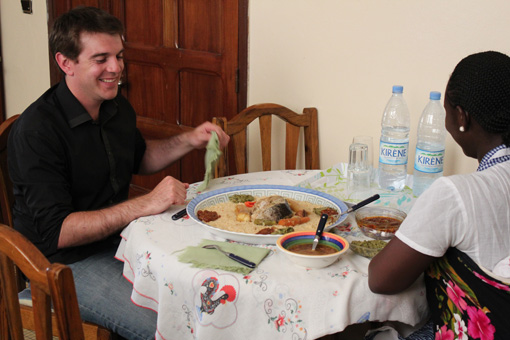
Friday, May 6: I had an appointment with Maram in the late morning, so I took the opportunity to explore the city. The weather was beautiful, people I met were smiling, and shops were gradually opening. Maram came to pick me up, and we went to his place for lunch with his wife and children. I finally got to taste Senegalese cuisine! On the menu: Thié bou dien (rice with fish), the national dish, and an absolute delight!
Before hitting the road north to Saint Louis, we picked up Marthe and Souké, two PhD students in physics who were also participating in the festival.
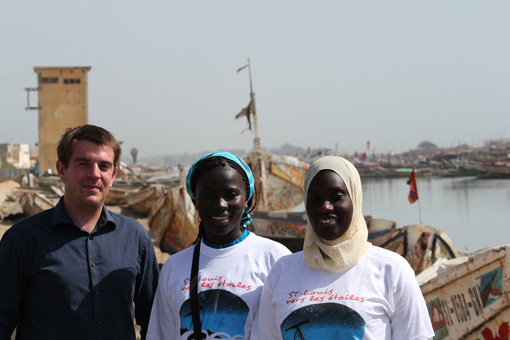
Traffic getting out of Dakar was heavy, so it took us about 5 hours to reach Saint Louis, arriving after dark. Dah was waiting for us when we arrived. I had the choice to sleep at a hotel in the city center or stay with my new travel companions in a house on the university campus. My choice was easy; I preferred to stay in good company! Later that night, Baïdy arrived by minibus and joined us at the “house.” We didn’t get much sleep; there was a lot of work ahead of us. Tomorrow, the festival begins!
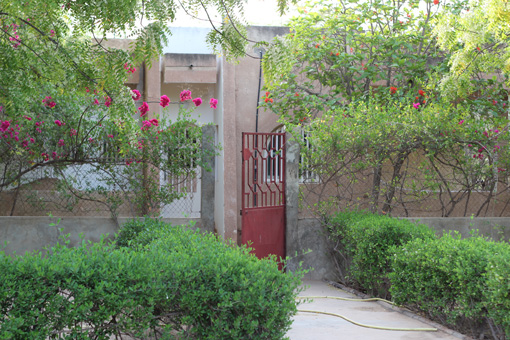
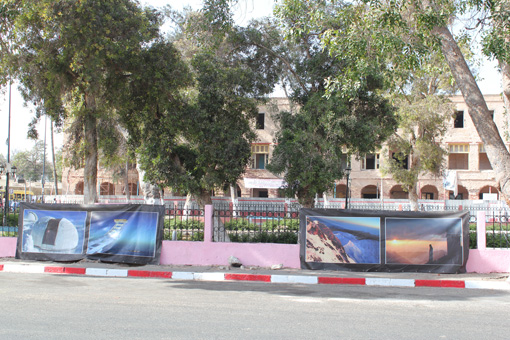
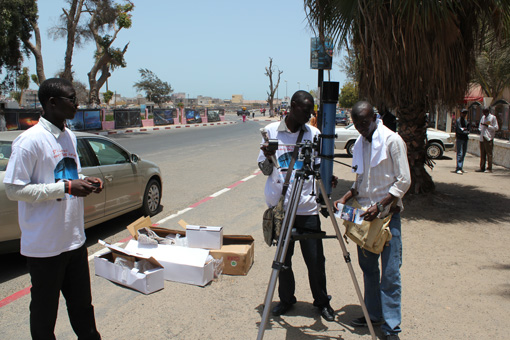
Saturday, May 7: Alright, it’s go time! The festival kicked off today. We started by setting up two exhibitions in Place Fedherbe in Saint Louis: one featuring stunning images taken from Pic du Midi, and my own humble “Cosmic Fauna” astrophotography exhibit.
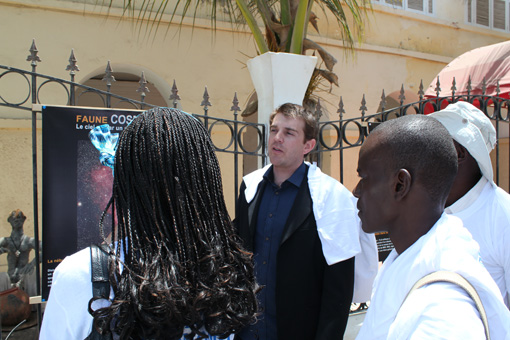
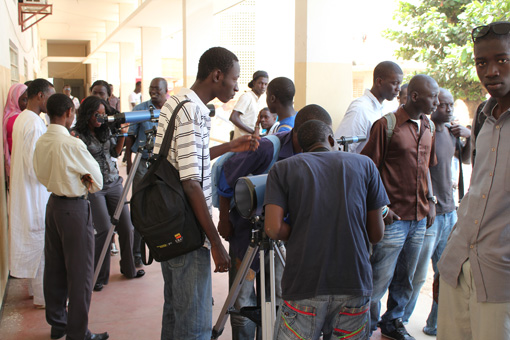
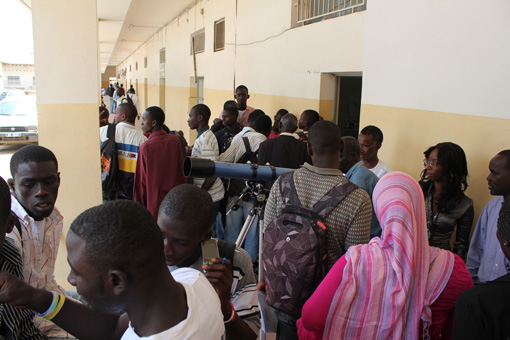
It was a real pleasure to tell passersby about the photographed objects and the techniques used. It’s a fantastic way to talk about astronomy in a general sense and answer the many questions the night sky can spark. At the same time, students from Gaston Berger University set up telescopes nearby, offering solar observation via projection to anyone interested.
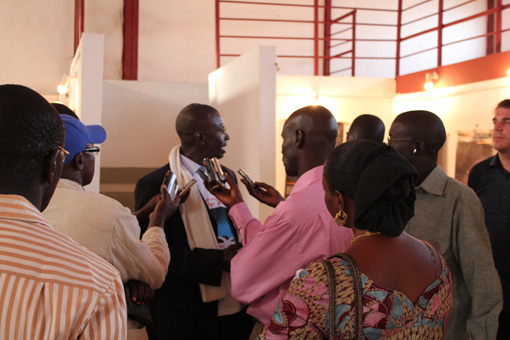
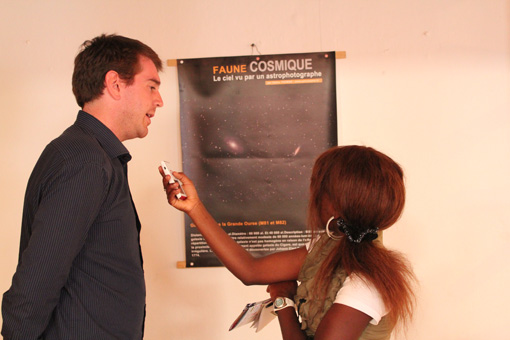
Later in the day, my exhibit was moved to one of the rooms at the French Institute. At 6 PM, the exhibition opening took place, and the festivities were officially announced. It was a good opportunity to answer questions from the local press.
In the evening, we set up two telescopes in a popular seaside neighborhood, on Place Pointe-à-Pitre. We put up a large screen to project real-time images of the Moon. The second telescope was used for visual observation. There were many observers, and they were consistently amazed to see the craters of our satellite or the rings of Saturn.
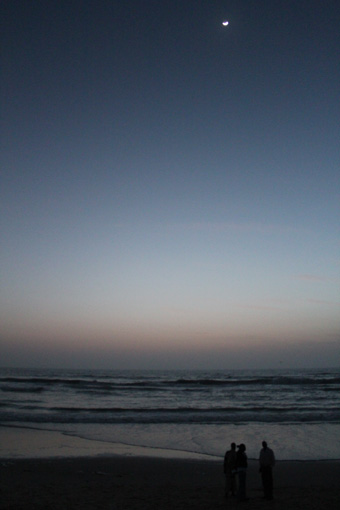
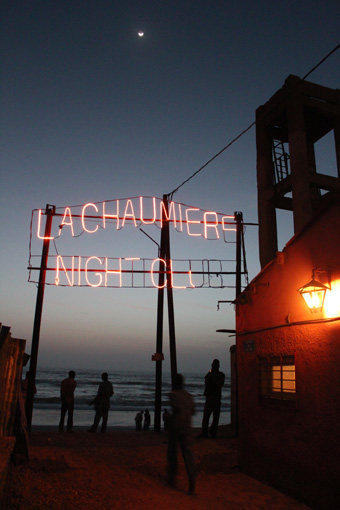
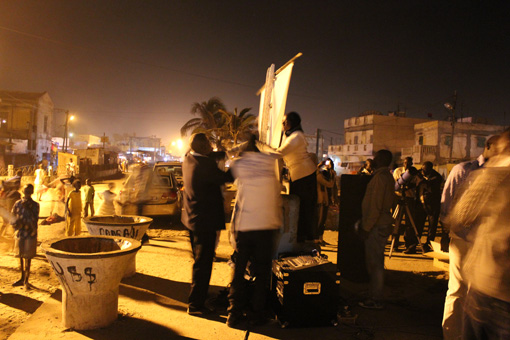
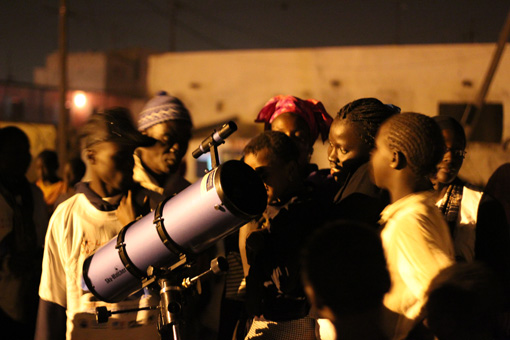
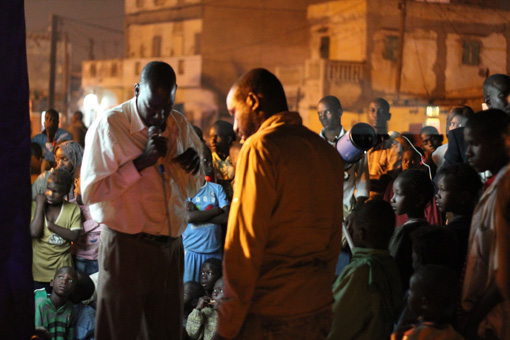
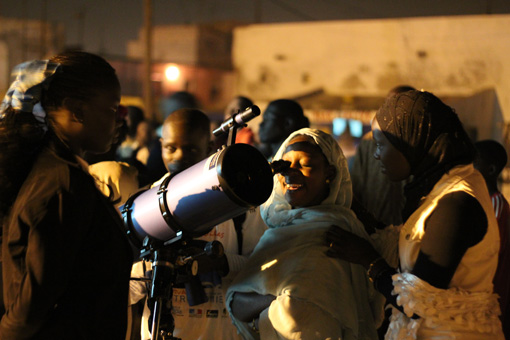
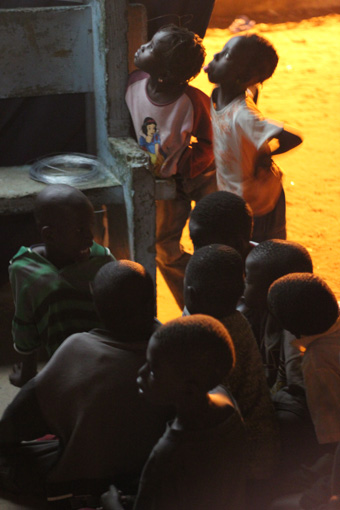
The feeling of participating in something unique and important was incredibly strong and moving. The observation lasted several hours, questions poured in, and we did our best to answer them. The local fishermen also know the sky well, though not with the same terminology as us. They already use it for nighttime navigation and lament the younger generation’s reliance on GPS. The haze quickly rose, and we finally packed up the equipment. Dinner at a restaurant before heading back to sleep.
Sunday, May 8: Woke up at 7 AM. I had the pleasure of giving my first training session this morning on “the use of instruments in astronomy” to a group of about ten students. I remembered my own experience and thought of my friend Julio, who introduced me to using the C11 and its mount. Fueled by passion, I spent a lot of time explaining everything in detail.
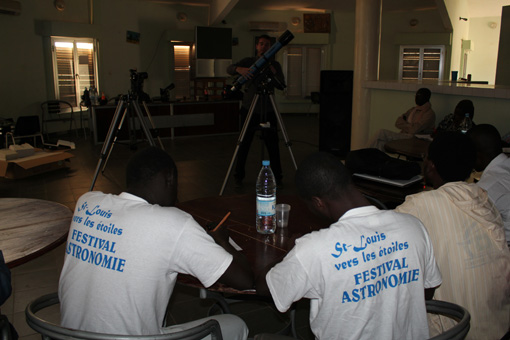
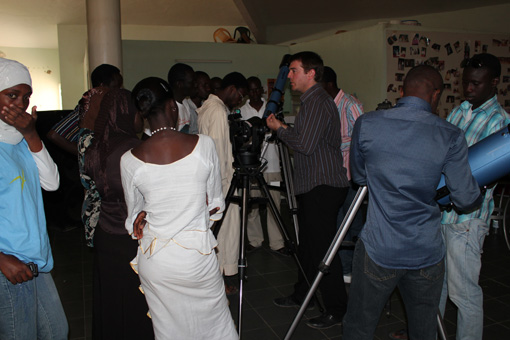
The students seemed interested, but after the meal break, we tested their ability to set up a telescope in under 4 minutes. The fastest one would win a 10,000 CFA franc note! The exercise was simple: correctly set up the telescope (a 90mm refractor) and aim at a specific point (a crane). The mount had to be properly aligned, and both the telescope and the finder scope needed to show the crane and be in focus. The winner completed the exercise in 2 minutes and 12 seconds and snagged the prize! The atmosphere was full of laughter.
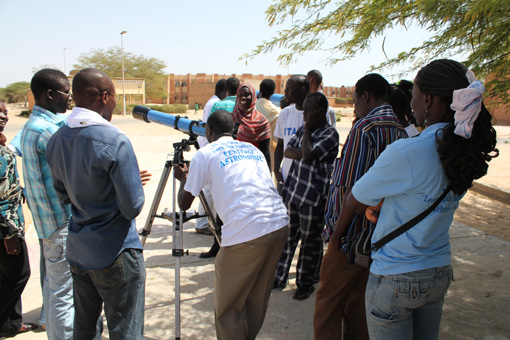
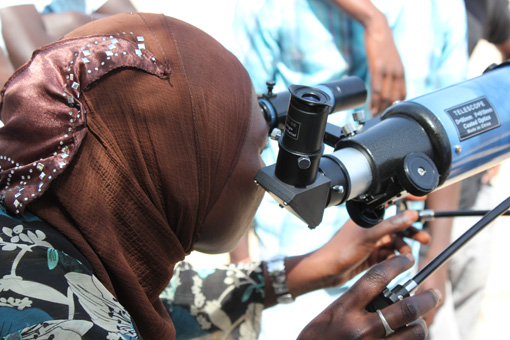
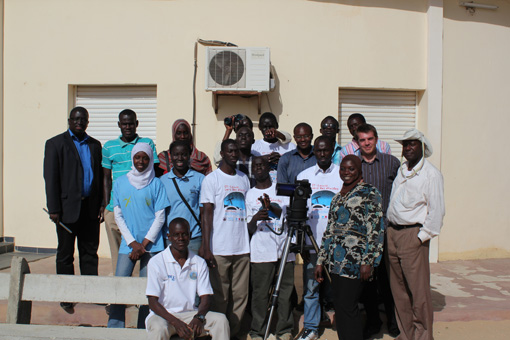
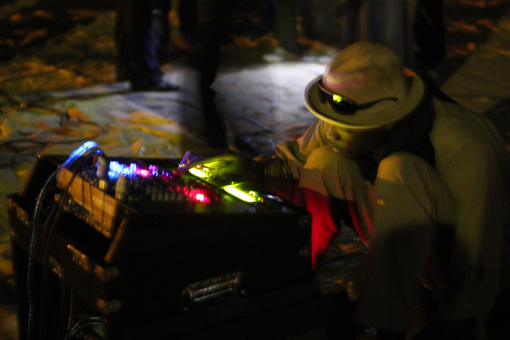
In the evening, we set up the telescopes on the football/basketball field of Gaston Berger University. As always, we set up a giant screen for real-time moon projection using a webcam. Our DJ attracted the crowd with the latest hits, and the microphone allowed us to explain certain phenomena and answer questions… until a power outage brought our animation to an end.
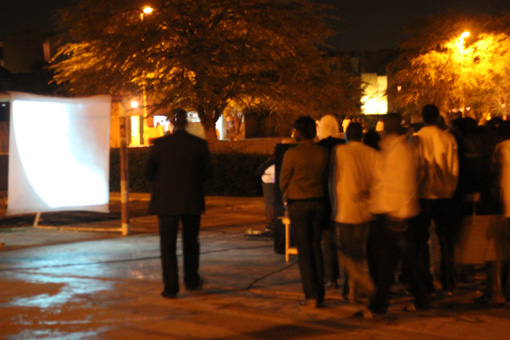
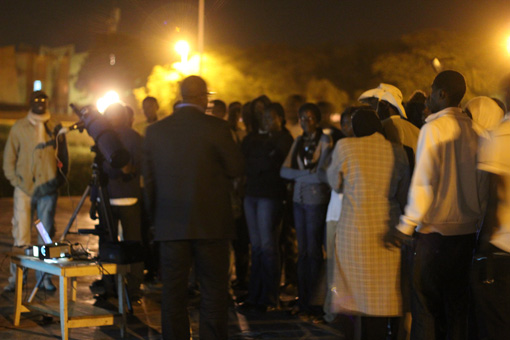
Power outages are frequent in Senegal, and the already extraordinary sky then became absolutely perfect! That evening, after dinner, we went back to sleep, but not before Maram and I took the opportunity to capture some wide-field images of the Milky Way. With just an 8-second exposure, using a pocket tripod set up on the car roof, we got results unimaginable from France.
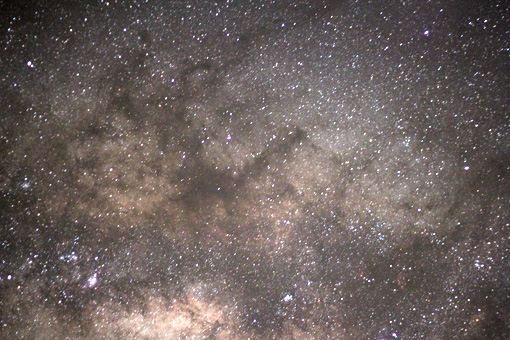
We were only 17º North latitude, and the southern sky was perfectly visible. What a joy to see the full Scorpion constellation high in the sky, and later, even the Southern Cross! The spectacle was sublime.
Monday, May 9: Today, the educational workshops and daytime observations in the village of NGallèle were canceled because the teachers were on strike (goes to show, it’s not just in France where things get shaken up!). We used the time to fine-tune the afternoon conference: “Religions and Astronomy.” It was a sensitive topic, and we wanted everything to go smoothly. We met with the university’s Imam to get acquainted. During the conference, he would speak about astronomy from the perspective of the Muslim religion, accompanied by two university professors who were experts in religious texts and linguistics. The invited priests couldn’t make it as they were traveling. The conference began around 5 PM. The university amphitheater wasn’t full, as many students had exams today.
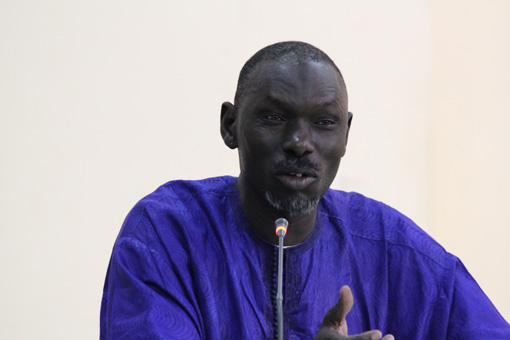
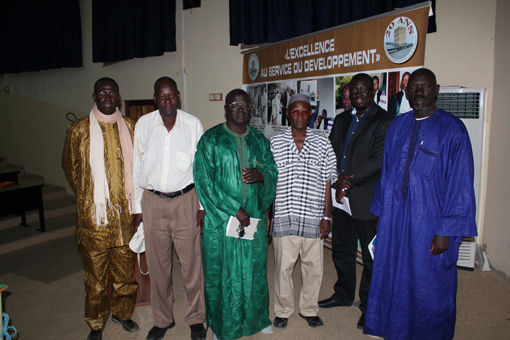
Everything went wonderfully. The discussions led to a very positive and open conclusion: astronomy and religion are absolutely not in opposition. On the contrary, they complement each other perfectly. One provides answers to “How does the universe work?” and the other answers “Why does the universe exist?”. The Imam concluded by thanking the astronomers. Thank you for providing concrete answers to questions he had always pondered, but also thank you for helping him fight against obscurantism. A beautiful message of peace.
In the evening, we headed to the village of NGallèle for observations on the sand. We were met by women and children who had turned out in massive numbers, proof that the publicity by Dah and his team had worked well.
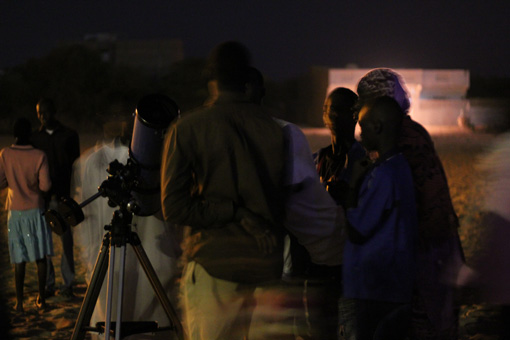
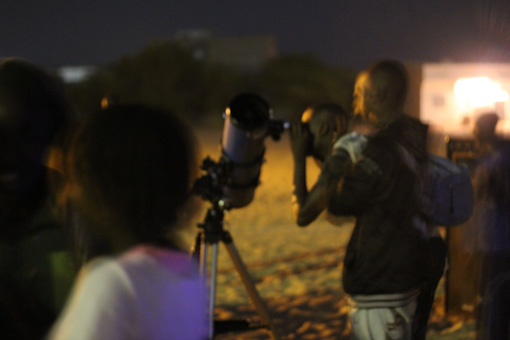
Questions flowed, just like every evening. People wanted to know and understand how our universe works, where we are located, and so on. We were always incredibly well received. No one left without thanking us. Such grace! We have so much to learn!
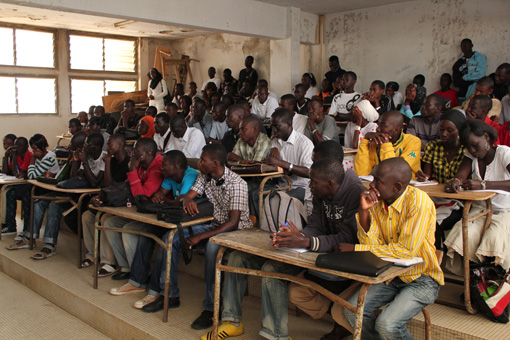
Tuesday, May 10: This morning, we started with workshops at Charles de Gaulle High School in Saint Louis. We had a class of over 100 students to train. After a general explanation of the Moon’s phases, we divided the class into two groups to work on this simple phenomenon. Again, there were many questions. We increasingly felt like we were participating in something truly useful.
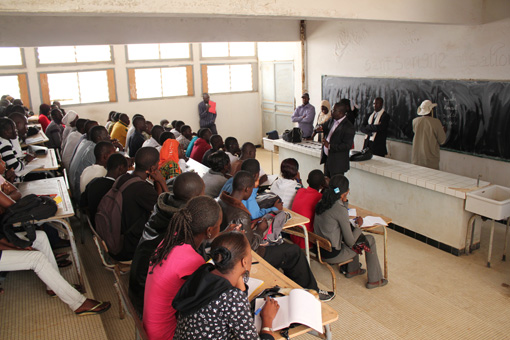
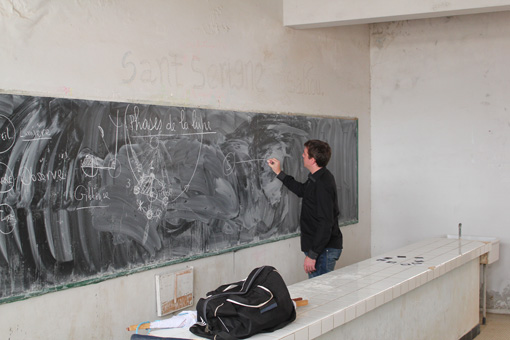
Daytime observations didn’t happen because a thin cloud veil obscured the sun. We took the opportunity to extend the workshops. In the evening, we went to Diamaguène, a district of Saint Louis. We had an appointment at the Community Center for nighttime observations. Once again, our DJ drew a crowd!
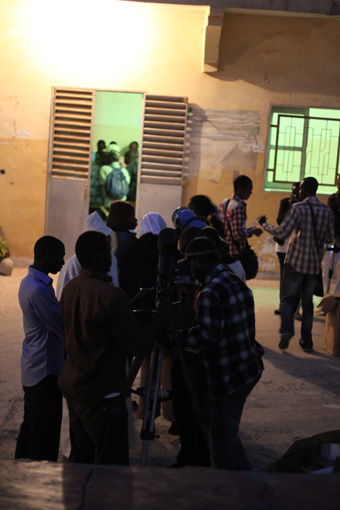
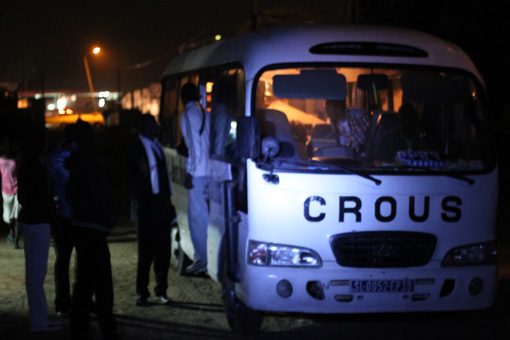
The observation wasn’t extraordinary due to the haze covering a large part of the sky. However, green lasers allowed us to point out the main constellations. The students packed up the equipment and headed back by bus.
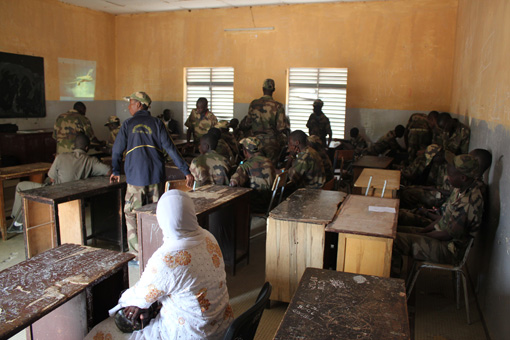
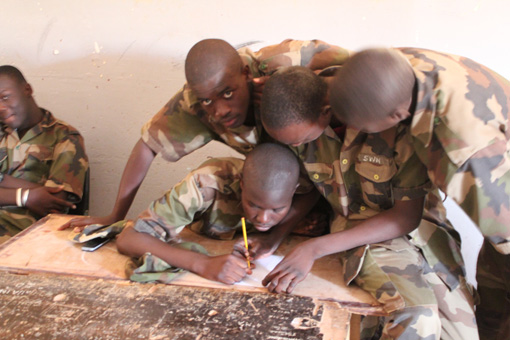
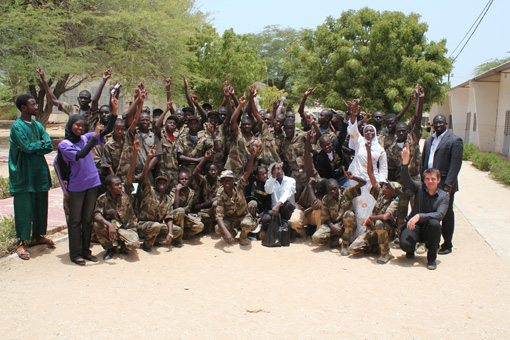
Wednesday, May 11: Today, we spent the whole day with the military! This morning, we went to the Military Prytanée for workshops on sky charts, orientation using constellations, and how to make a water compass. The exercises were practical and useful: finding Polaris from the Big Dipper or south using the Scorpion constellation.
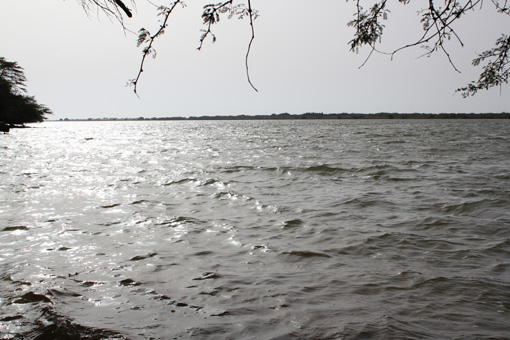
During the lunch break, we took the opportunity to go to the bank of the Senegal River. Tradition dictates that you must touch it the first time you see it… So, that’s done now!
In the afternoon, we continued with Maram’s conference on exobiology, “The Quest for Life in the Solar System and Beyond.” In the evening, we wrapped up with a nighttime observation. Both kids and adults had tons of questions, and we finished very late!
Thursday, May 12: We spent the entire morning at the French school. We had a wide range of levels for the workshops, from the very youngest to the oldest middle schoolers. Since there are ways to do astronomy while having fun, everyone got something out of it. We embarked the little ones on a spaceship called Earth for a long, year-long journey around the sun. “WOWs” erupted from everywhere when the classroom door, transformed into a planetarium, closed and the stars appeared on the wall, as if night had just fallen! For every question, dozens of hands shot up to answer! What enthusiasm for astronomy! In between sessions, I took the opportunity to capture some photos of the city.
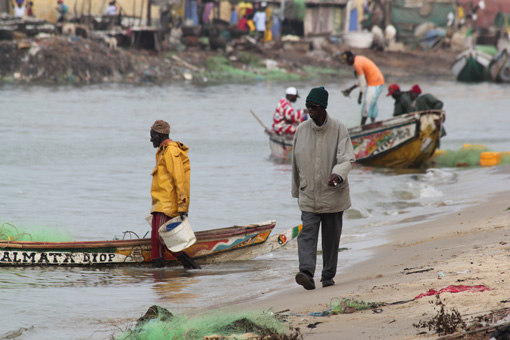
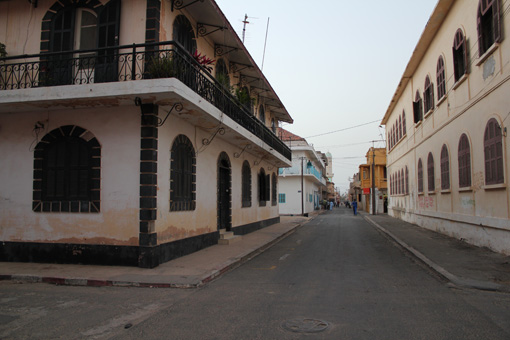
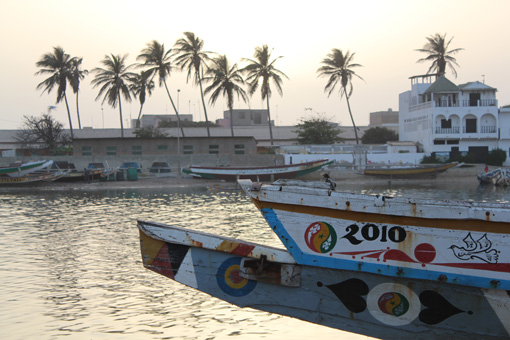
In the afternoon, I gave an astrophotography training session at the French Institute, right next door.
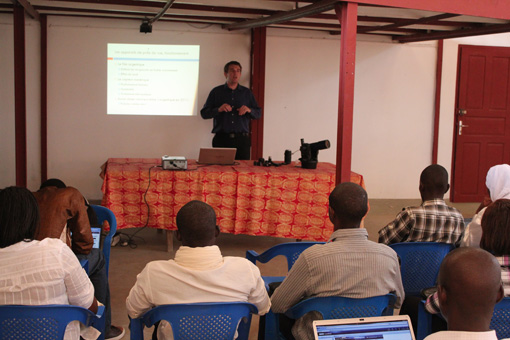
Friday, May 13: Installation of the Solar System exhibition at the CRDS (Centre de Recherches et de Documentation du Sénégal). A beautiful, very comprehensive exhibit!
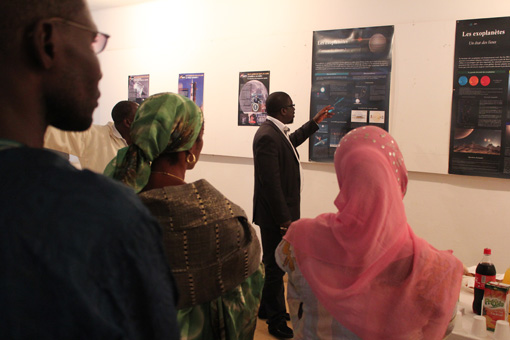
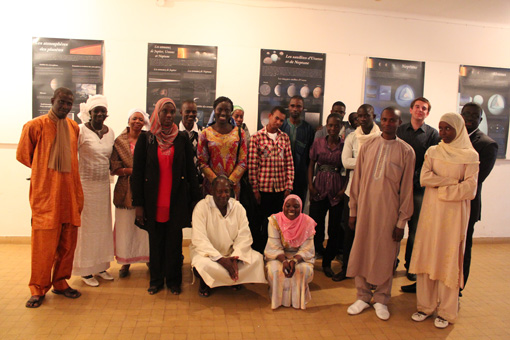
The day continued at the Ameth Fall Girls’ High School. We set up two large rooms with workshops on sky charts and the phases of the Moon.
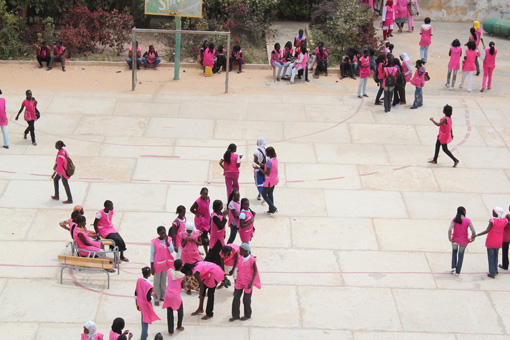
The small travel planetarium we used was a huge hit! Maram and I led a workshop in one room, while Baïdy, Souké, and Marthe took care of the other. Most of the students were in 5th grade and had a hard time staying quiet 😉. The nighttime observations at the CRDS mainly attracted parents of students from the French school. Apparently, our interventions the day before had been quite the talk back home!
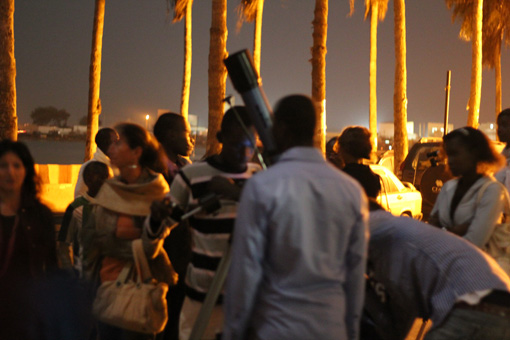
Saturday, May 14: In the morning, I led my second astrophotography training session at the French Institute. Meanwhile, my colleagues were running workshops nearby. At noon, Dah invited us to his home for lunch. We shared a traditional meal with his lovely family. Another wonderful moment all together.
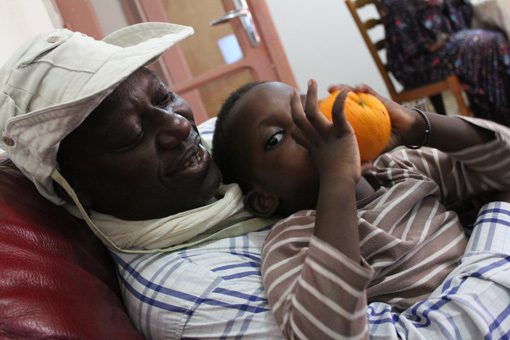
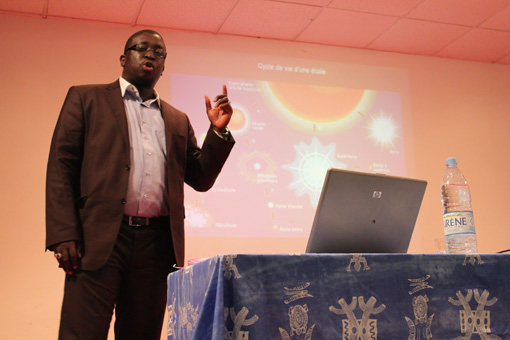
In the afternoon, Maram gave a conference on cosmology: “A Brief History of… 13 Billion Years.” Fatigue was definitely setting in for all of us, but Maram still managed to inspire us and make us dream. He truly has a gift for that!
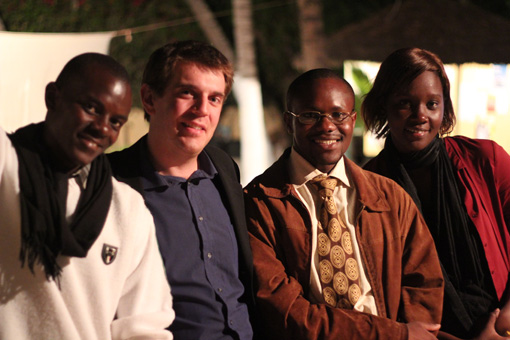
Tonight, the festival concluded. The French Institute organized a dinner under the stars, attended by the prefect, the mayor, the rector, the French consul… in short, quite the esteemed crowd. My friends and I animated the evening by projecting the Moon in real-time onto two large screens, along with photos taken during the week and some astrophotos I had brought in my luggage. A beautiful finale to an exceptional week! A big thank you to the students who followed us throughout the week despite their exams!
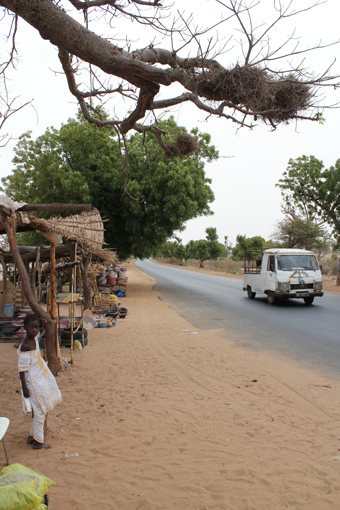
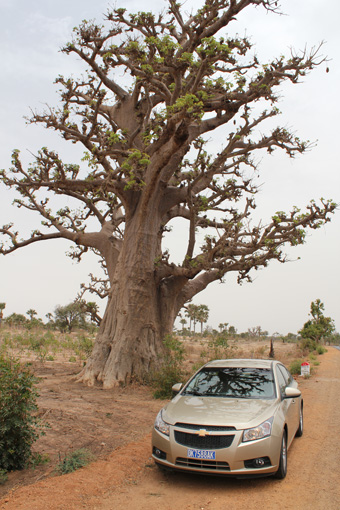
Sunday, May 15: Back to Dakar, a little sad to say goodbye to Dah and the university students. It’s a promise, we’ll see each other again! The road between Saint Louis and Dakar is beautiful, with baobab trees accompanying our journey.
At noon, a delicious family meal at Maram’s house, then back to the hotel. I went to bed at 6 PM. We were all utterly exhausted!
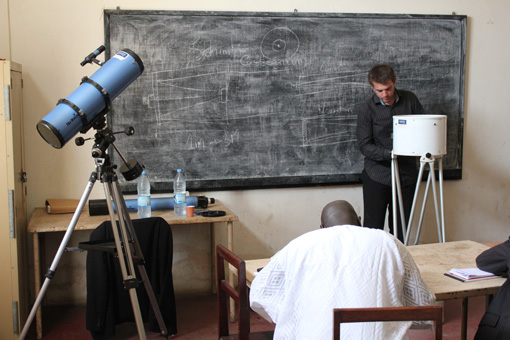
Monday, May 16: The entire day was dedicated to training ASPA members who couldn’t make it to Saint Louis during the week. I started the morning with instrument usage and continued in the afternoon with astrophotography.
In the evening, before an excellent Dibi (if you don’t know what that is, Google is your friend!) at Maram’s, we went sightseeing in the city, even making it to the Dakar lighthouse, which allowed us to see all the way to Pointe des Almadies, the westernmost point of the African continent!
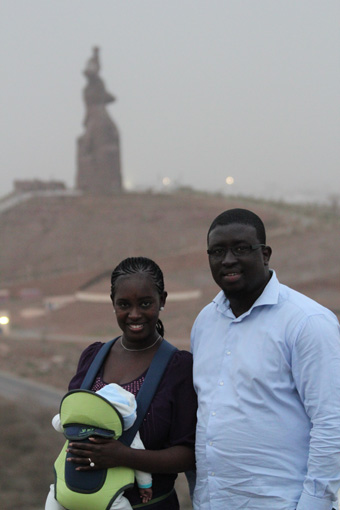
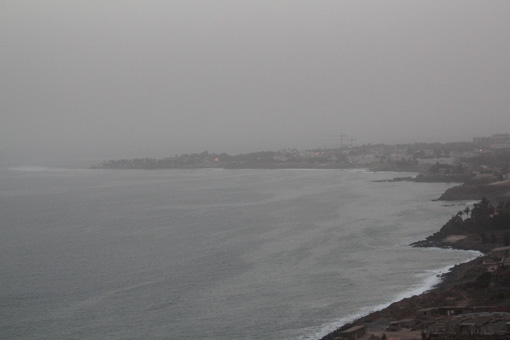
Tuesday, May 17: The last day is always the saddest, so let’s try to brighten it up a bit! I took the opportunity to do some tourism. Maram took me to Gorée Island, a few kilometers off the coast of Dakar. It was from here that many enslaved people departed Africa to be sold somewhere on the other side of the ocean. A terrible past that must never be forgotten.
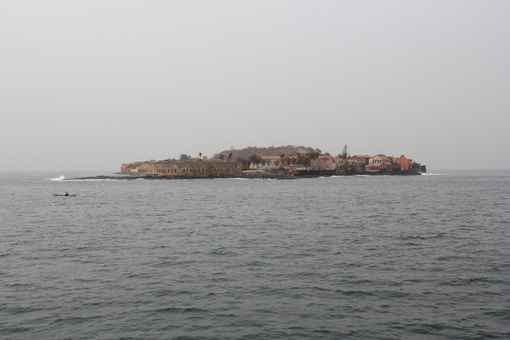
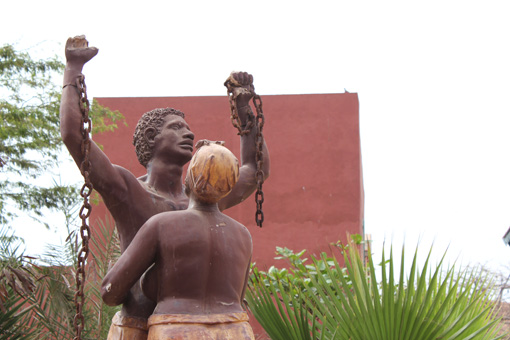
The island is superb; we stayed there for two hours before taking the boat back.
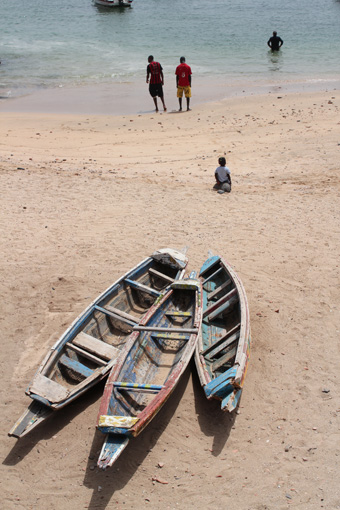
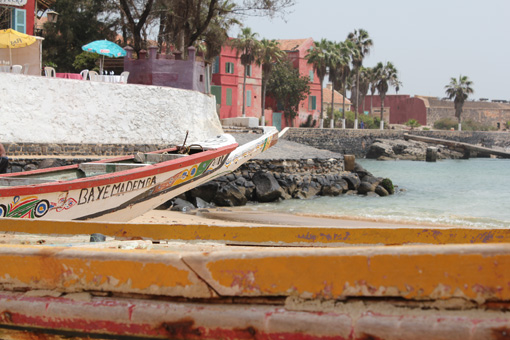
In the afternoon, it was shopping time; the local craftsmanship is beautiful. In the evening, Maram took me to the airport. It was too hard to say goodbye, so we simply said “see you soon.” I arrived in Senegal with one suitcase and two contacts. I returned with two suitcases, full of gifts I received here, and new friendships that are just waiting to be nurtured. If you ever get the chance to go to Senegal, don’t hesitate—just go, you won’t regret it!