Bringing a Starlight Xpress SXVR-H18 CCD to the Observatory
My Latest Astro Obsession: The Starlight Xpress SXVR-H18 CCD!
Alright, folks, there’s some exciting new gear at the observatory! Thanks to a super tempting offer I spotted on a well-known forum, I recently snagged myself a new astro camera: the Starlight Xpress SXVR-H18, featuring the legendary Kodak KAF8300 CCD sensor!
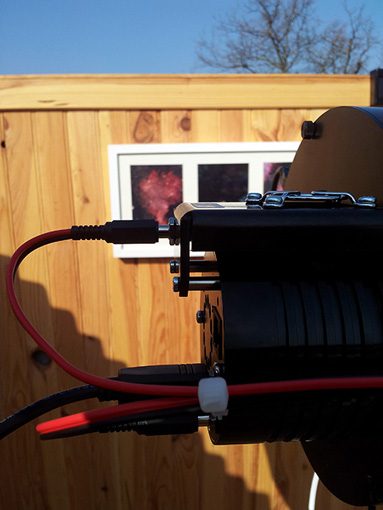
This particular CCD sensor is the same one you’ll find in popular cameras like the QSI 583, ATIK 383l+, SBIG ST8300, QHY9, FLI Microline KAF-8300, and several other models. So, why did I opt for the Starlight Xpress version over the others? Well, there were a few compelling reasons:
- The incredible value for money and Starlight Xpress’s stellar reputation for their camera electronics. I was already thrilled with the quality of my Lodestar, so I knew I was in good hands.
- The camera’s lightweight and compact design. It weighs in at a mere 400g!
- Lightning-fast image downloads: only 4.5 seconds for a full-resolution bin1 frame!
- The option to pair it with an upgradeable filter wheel and an excellent off-axis guider (OAG) – perfectly suited for my Lodestar.
- Its impressive cooling capabilities, allowing me to reach -40°C below ambient temperature.
Immediately after picking up the camera, I went ahead and acquired the Starlight Xpress motorized filter wheel.
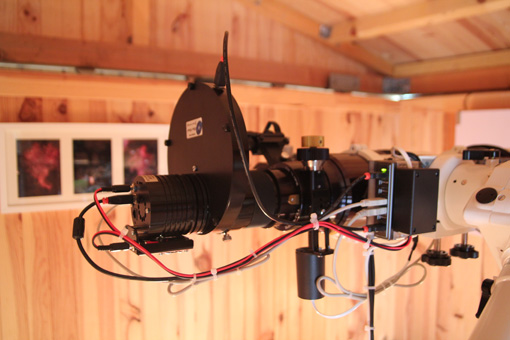
The camera came bundled with the SX Cooling Enhancer, a neat little external fan designed to maximize the delta T by efficiently dissipating the heat generated by the internal dual-stage Peltier cooler.
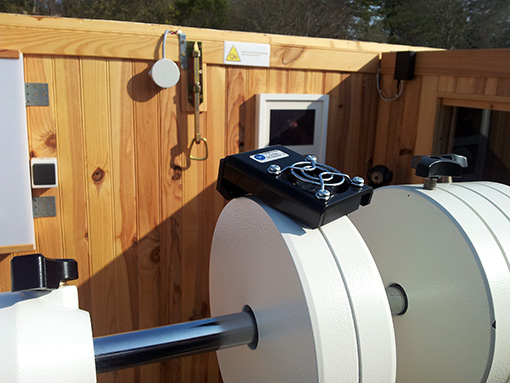
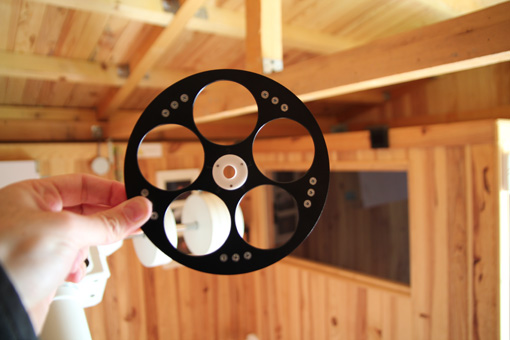
Here’s a peek inside the filter wheel, showing the carousel for seven 36mm filters. In this shot, only the Baader Ha, SII, and OII filters are in place. The Baader LRGB filters were installed a few days later, after a slight shipping delay.
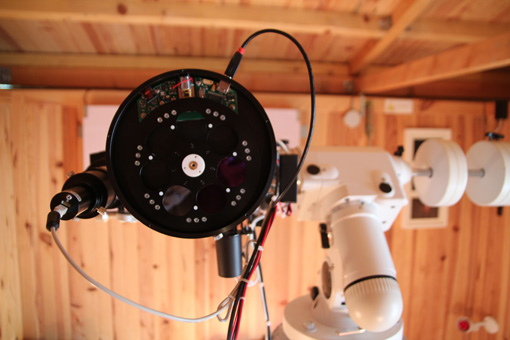
And with the filter wheel closed up…
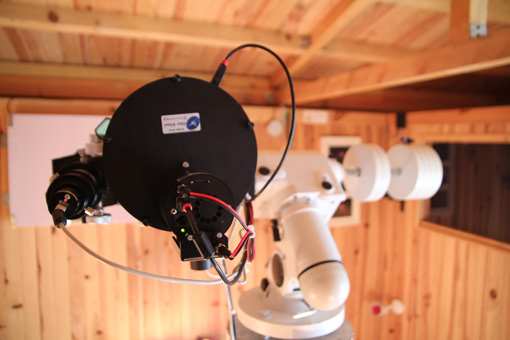
I also received a carousel designed for five 2” mounted filters, which is a nice bonus for future flexibility.
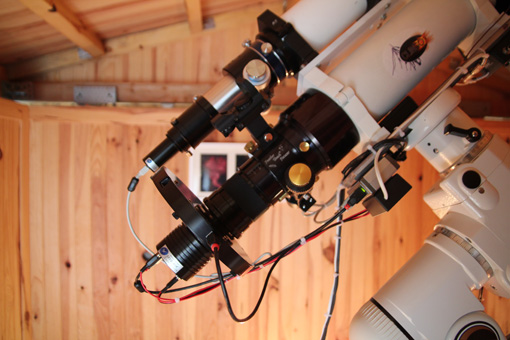
The camera and filter wheel combo creates a very short backfocus, which is perfectly compatible with my adjustable William Optics AFR-IV reducer/corrector on the FLT110 TEC. Sweet!
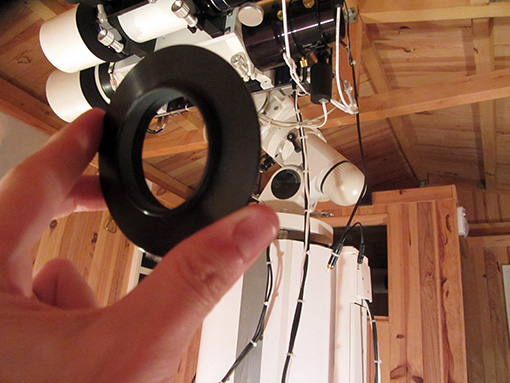
While I was at it, installing the new camera and its accessories, I decided to make a few additional tweaks. This included fitting a brand new, custom-made SkyMéca adapter ring!
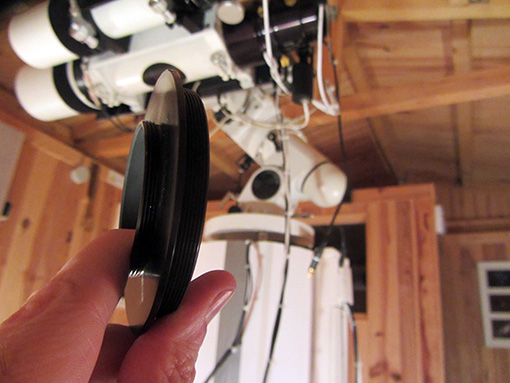
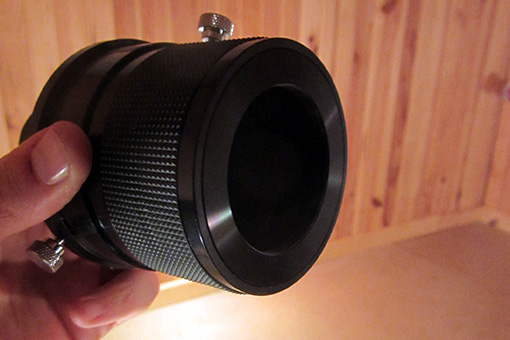
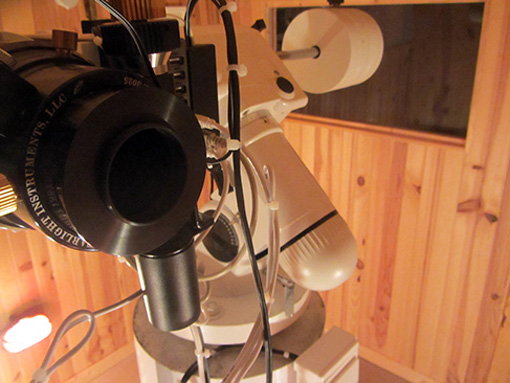
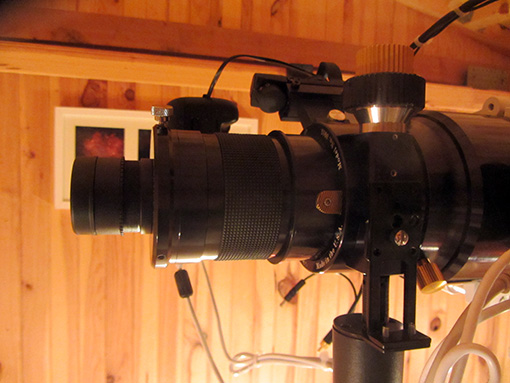
This adapter ring, roughly 3” in diameter on one side and 2” SCT thread on the other, allows me to directly thread the reducer/corrector onto the focuser output. This completely eliminates any tilt issues that can be introduced by the original three-point clamping system.
Here’s the William Optics AFR-IV reducer/corrector as it’s typically sold, with its standard 2” ring:
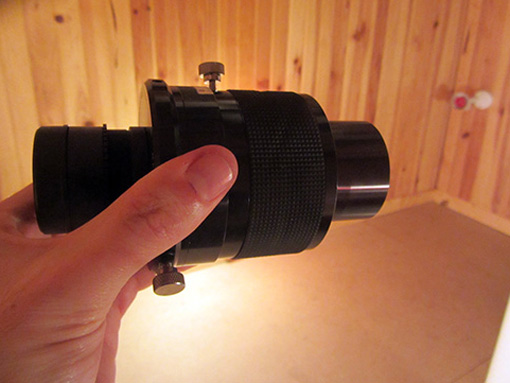
And the same unit, but without its 2” ring:
The SkyMéca adapter ring, now securely in place on the focuser:
And finally, the reducer/corrector threaded directly onto the focuser output, thanks to the new adapter ring:
When this adapter arrived, I was pleasantly surprised to find it had a glossy black anodized finish on the exterior (just like my Feathertouch focuser!) and a matte anodized finish on the interior (to prevent reflections) – exactly like high-end Takahashi rings! Didier Chaplain from SkyMéca is a friend, but more importantly, he’s an absolute pro. I genuinely and wholeheartedly recommend his work. In terms of quality and value, I don’t know anyone who comes close. He primarily does custom work, and his superb craftsmanship truly deserves a shout-out!
After getting everything dialed in and perfectly aligned (thank you, CCD Inspector!), I dove into my first imaging sessions with the new CCD. My initial observation: switching from a DSLR to a dedicated CCD is quite striking. Even though Kodak CCD sensors aren’t quite as sensitive as some of the Sony models, the camera’s superb thermoregulation and incredibly low read noise deliver truly stunning results!
Over the past two nights, I’ve run tests with 1-minute, 5-minute, and 20-minute exposures on various targets: M51, M3, IC434, M81/M82, M104, Markarian’s Chain, and M95 (with its supernova!).
Here’s a crop from the center of a 20-minute raw frame of M51, taken at -20°C, with just a super quick level adjustment. No filter, no processing, and a very rough focus – just to give you an idea!
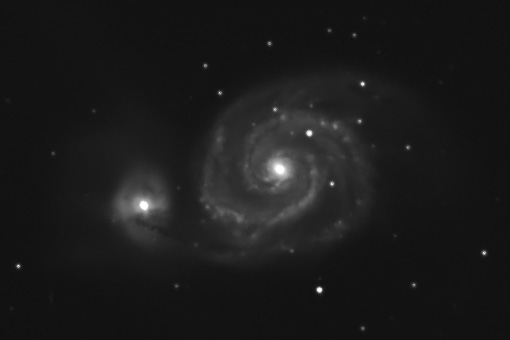
On most of the objects I tested, the SXVR-H18 easily outshines my 1100D in terms of sensitivity. Plus, and this was certainly expected, thermal noise has almost completely vanished with the CCD! The raw frames coming out of the H18 remind me of already processed DSLR images. I’ve got plenty to have fun with for a good long while!